
A healthy smile starts with a healthy foundation. While your child’s jaws are still growing, there is a valuable window to guide how their teeth and bite develop. Often, that can mean simpler care and fewer problems down the road. That’s why the American Association of Orthodontists recommends that every child have a first orthodontic visit by age 7.
An early visit doesn’t mean your child is headed straight for braces. Most children don’t need treatment right away, and many are simply monitored as they grow.
Why Age 7?
By around age 7, the first permanent molars and front teeth have usually come in. This makes it possible to spot developing bite, jaw, and spacing concerns early. It’s also a helpful time to act if needed: until about age 9, a child’s upper jaw can be widened more easily, before the growth plates fuse. This becomes much harder in adulthood.
Orthodontic Care Right Here at Bloom + Brighten
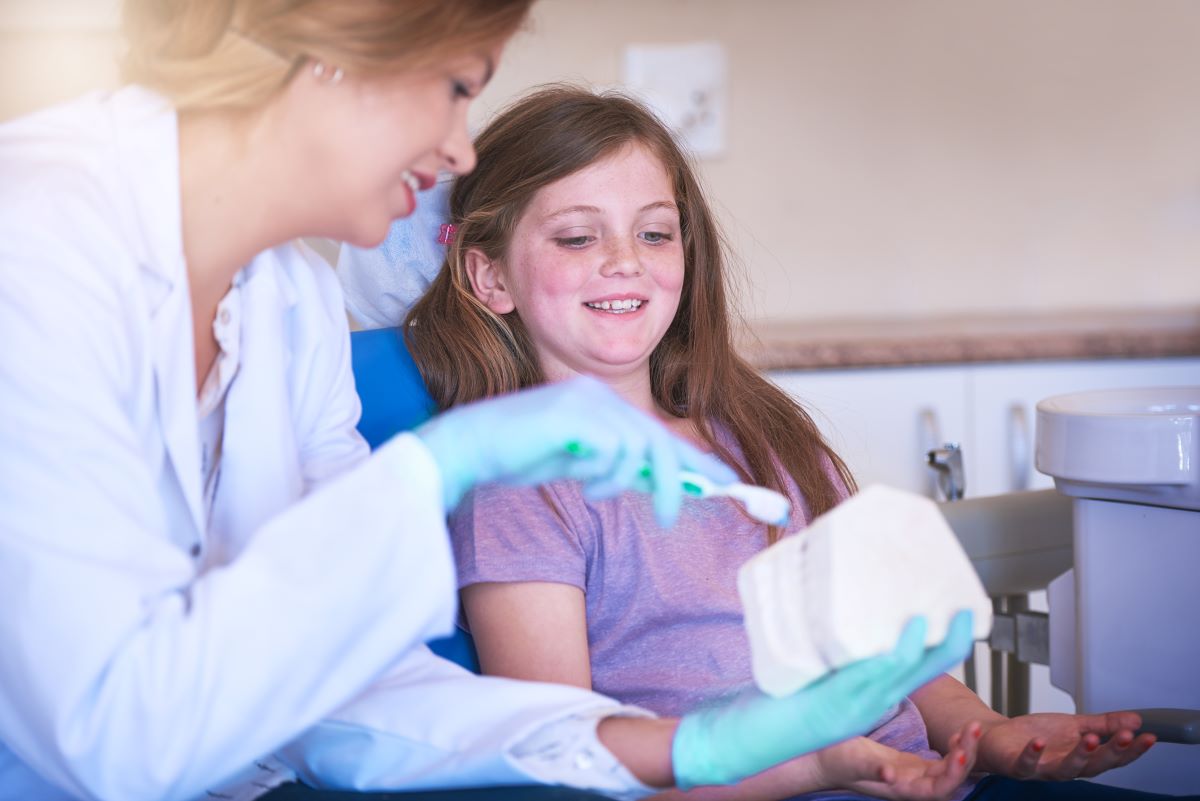
Getting an orthodontic opinion doesn’t have to mean finding a new office. Harmony Orthodontics sees patients directly at our Bloom + Brighten offices, so your child can be seen in a familiar, kid-friendly space they already know. For busy families, that means less driving, less juggling, and one less new place for your child to get used to.

The Benefits of Early Treatment
- Guides jaw growth: Working with your child’s natural growth, including widening a narrow upper jaw.
- Makes room for adult teeth: Creating space can reduce crowding and the possible need for extractions later.
- Helps prevent future problems: Correcting crossbites and protruding teeth lowers the risk of chipped teeth, TMJ issues, and uneven wear.
- Builds confidence: Addressing visible concerns can help children feel good about their smiles during their formative years.
Who May Benefit?
Early treatment is typically best suited to children ages 6 to 10 who have:
- Crossbites
- Narrow palates
- Severe crowding
- Protruding front teeth
- Thumb-sucking habits (learn more about our habit elimination programs)
Left unaddressed, some of these concerns can contribute to TMJ issues, uneven bites, facial pain, headaches, difficulty chewing, and sleep-related breathing issues. Our doctors also look at growth and development at every visit, so please let us know if you have concerns.
What to Expect
- Screening: A friendly exam and review of X-rays to see how your child’s teeth and jaws are developing.
- Watch or treat: Your child’s growth may simply be monitored with regular check-ups, or a short course of early treatment, known as Phase 1, may be recommended.
- Phase 1 care: When treatment is needed, it typically lasts 6 to 12 months and targets specific concerns using options such as palatal expanders, partial braces, or Invisalign First.
- Resting period: Your child is monitored as their permanent teeth come in, and then you can decide together whether a second phase is needed.
Will My Child Still Need Braces Later?
Sometimes. Some children need a second phase of treatment once their permanent teeth are in, but it’s often shorter and simpler thanks to the groundwork laid early on.
Have Questions About Your Child’s Bite?
If your child is approaching age 7, or if you’ve noticed something that concerns you, we’re happy to talk it through. Ask our team at your next visit or contact us to learn more about seeing Harmony Orthodontics at our offices.